
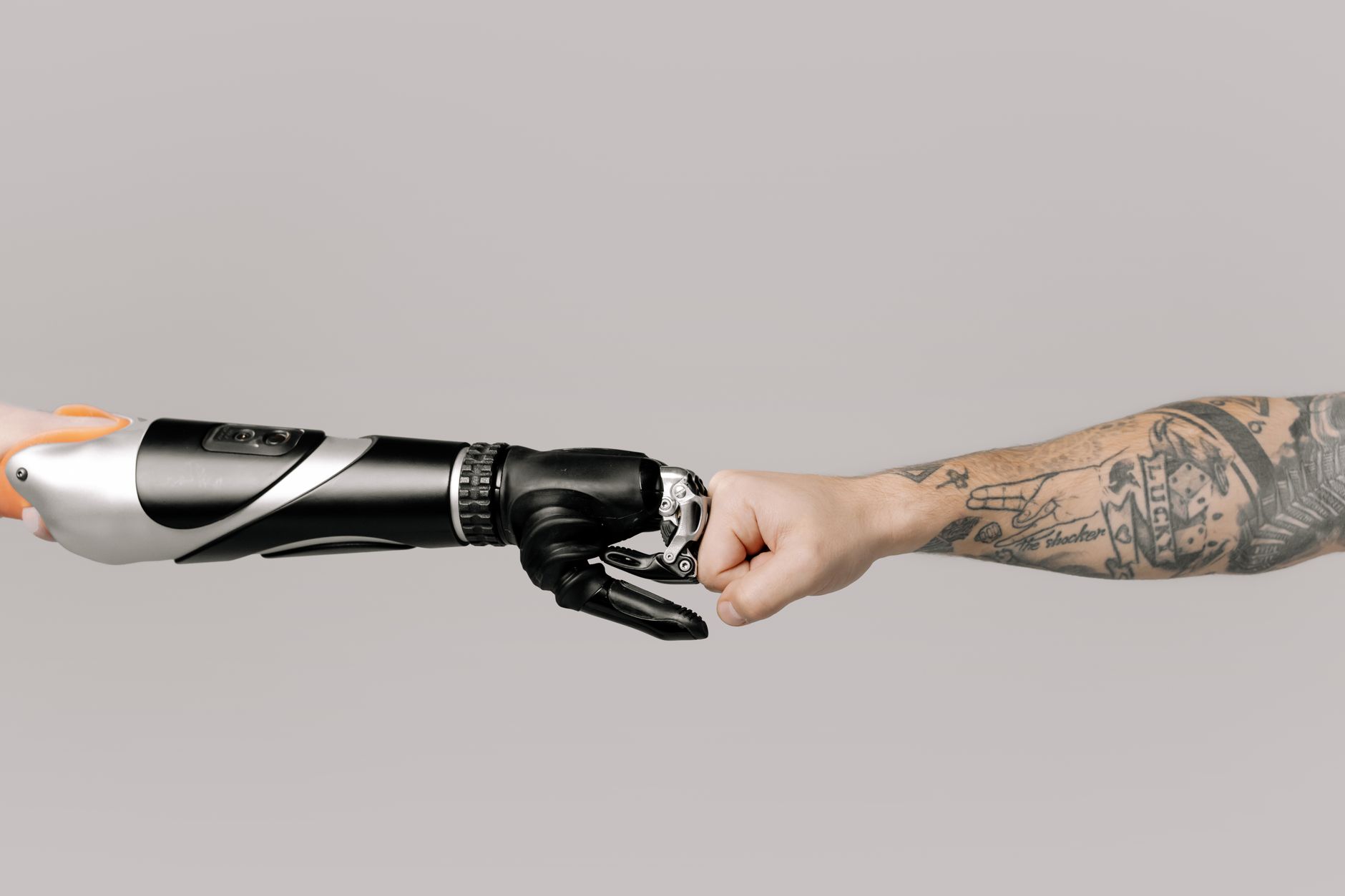
There’s a version of “we use AI for content now”
that resembles a thoughtful operational decision — a well-designed editorial process with clear human judgment at the strategic and editorial review layers, AI handling the tasks it’s actually suited for, and a quality standard that the process is accountable to.
There is a version that is a budget decision dressed up as a strategy.
Most of what I’m seeing is the second version. And I say that not to be difficult but because the difference matters enormously — for what the content produces, for what the brand communicates, and for what happens to the operation when the AI output starts degrading in ways that are slow and hard to notice until they’re expensive.
The tell is in how the decision was made. “We use AI for content now” as a strategy started with the question of how to produce more content for less money. The production cost went down. The strategic question — what are we trying to accomplish with this content and is this the operation that accomplishes it — either wasn’t asked or was answered with “yes, and it’ll be cheaper.”
That’s not a strategy. That’s an efficiency play on a process that may not have been working to begin with.
What AI does well, and what it doesn’t
AI writing tools are genuinely useful at several stages of a content production process. Research aggregation — summarizing what’s already been written on a topic, identifying the consensus view, surfacing questions that remain unanswered. Structural drafting — turning a solid brief and clear outline into a working draft that needs editorial work but gives you something to edit rather than starting from blank. Format adaptation — taking existing content and restructuring it for a different channel or purpose.
These are real productivity gains. They’re not small. A writer who uses AI well on these tasks can meaningfully increase output without proportionally increasing the time they spend on it.
What AI can’t do — and what the human editorial layer exists to provide — is the judgment that determines whether any of it is worth doing. What’s the angle that makes this piece worth writing rather than the forty pieces on this topic that already exist? What’s the specific position this brand can hold that no other brand can hold? Where is the consensus wrong, and what’s the evidence? What would make a reader trust this piece enough to act on it?
Those are editorial questions. They require a human who understands the brand, the audience, the competitive landscape, and the quality standard — and who has enough judgment to apply all four simultaneously. The prompting skill that gets good output from AI tools is an editorial skill. It’s the ability to give an AI system a brief so specific and well-considered that the output it produces is worth editing. That brief doesn’t come from the AI. It comes from the editorial judgment that the AI is supposed to be supporting.
The degradation problem
Here’s what I’m stuck on with AI-first content operations: the degradation is slow and invisible until it isn’t.
AI output trained on AI output — which is increasingly what’s happening as AI-generated content proliferates across the web — produces content that is progressively more generic, more hedged, more consensus-bound. The first generation of AI-assisted content looks like edited human writing. The third or fourth generation looks like content that has been sanded smooth, that says what everybody says in the most neutral possible way, that could have been published by any brand in the world without changing a word.
That’s ghost content. It’s the natural end state of an AI content process without a strong editorial standard enforcing distinction. And it gets you to that end state faster than a human-only process would, because the AI is producing volume at a rate that outpaces the editorial review capacity of teams that are using AI specifically to reduce editorial overhead.
The answer isn’t to avoid AI, necessarily. It’s to treat the editorial standard as non-negotiable — the thing that the AI supports, not the thing that the AI replaces. What good editorial feedback looks like applied to AI output is the same thing it’s always been: is this specific, defensible, and worth publishing, or is it competent production of something nobody needed?
The strategic question that has to come first
Before the tools question — before AI or no AI, before which workflow, before how much is produced and at what cost — there’s a strategic question that determines whether any of it matters.
Content plan versus content strategy is the distinction that applies here. A content plan is a production schedule. A content strategy is the answer to: who are we trying to reach, what do we want them to know or do, what content will accomplish that, and how will we know if it’s working? A content plan built on an AI workflow is still a content plan. It has not become a strategy because the production cost dropped.
The organizations that are using AI well in their content operations started with the strategy, used it to define the editorial standard, and then built the AI workflow to serve that standard. The ones that are going to have a problem started with the workflow, assumed the strategy would follow, and are going to discover in eighteen months that they have a large archive of competent, generic content that ranks for nothing, converts no one, and can’t be cited by any AI system that’s evaluating it for trustworthiness.
Faster production of the wrong thing is not progress. It’s a bigger hole, dug more efficiently.
About Jacob Clifton Jacob Clifton is the principal of Clifton Creative Agency — content strategist, editor, and writer with 25 years of professional experience. Helped Television Without Pity reach one million readers a week. Built Gawker’s Morning After and Tribune’s Screener to one million monthly readers. He has watched the AI content conversation unfold in real time and has a specific opinion about which version of it produces anything worth reading.
The strategy question has to come before the tools question. If your content operation is running on workflow without a point of view behind it, the content plan versus strategy distinction is the right place to start — or reach out directly if you’d rather have the conversation with someone who’s already seen what you’re dealing with.
No. A content strategy defines who you’re trying to reach, what you want them to know or do, what content will accomplish that, and how you’ll know if it’s working. AI is a production tool. A content plan built on AI workflow is still a content plan — it becomes a strategy only when there’s human editorial judgment deciding what’s worth producing and why. The production cost dropping doesn’t answer any of the strategic questions.
The decision about what’s worth writing in the first place — the angle that makes a piece worth reading when forty others exist on the same topic. The position only this brand can hold. Where the consensus is wrong and why. What would make a reader trust this piece enough to act on it. These require a human who understands the brand, audience, competitive landscape, and the quality standard simultaneously. AI can draft; it can’t decide.
AI content degradation is the progressive genericization of content produced by AI tools trained on increasingly AI-generated source material. Each generation of AI output tends toward greater consensus, more hedging, and fewer distinctive edges — until the content could have been published by any competitor without changing a word. The prevention is a non-negotiable editorial standard: every piece must say something specific enough to be citable, defensible enough to be trusted, and distinct enough that it couldn’t have come from anywhere else.
The same way they apply to any content: is this specific, is it defensible, and is it worth publishing? The AI-assisted workflow changes how a draft gets produced — it doesn’t change what makes the draft publishable. The editorial review layer needs to be at least as rigorous for AI-assisted content as for human-written content, because AI produces competent generic drafts faster than human reviewers can catch the genericness accumulating.
A workflow describes how content gets produced — the tools, the sequence, the people involved. A strategy describes what the content is supposed to accomplish and for whom. You can have a sophisticated AI workflow with no strategy behind it, and the result is efficient production of content that does nothing useful. The organizations using AI well built the strategy first, defined an editorial standard from it, and then built a workflow — including AI tools — that serves that standard.
This post is part of the Clifton Creative guide to GEO and AI search.