
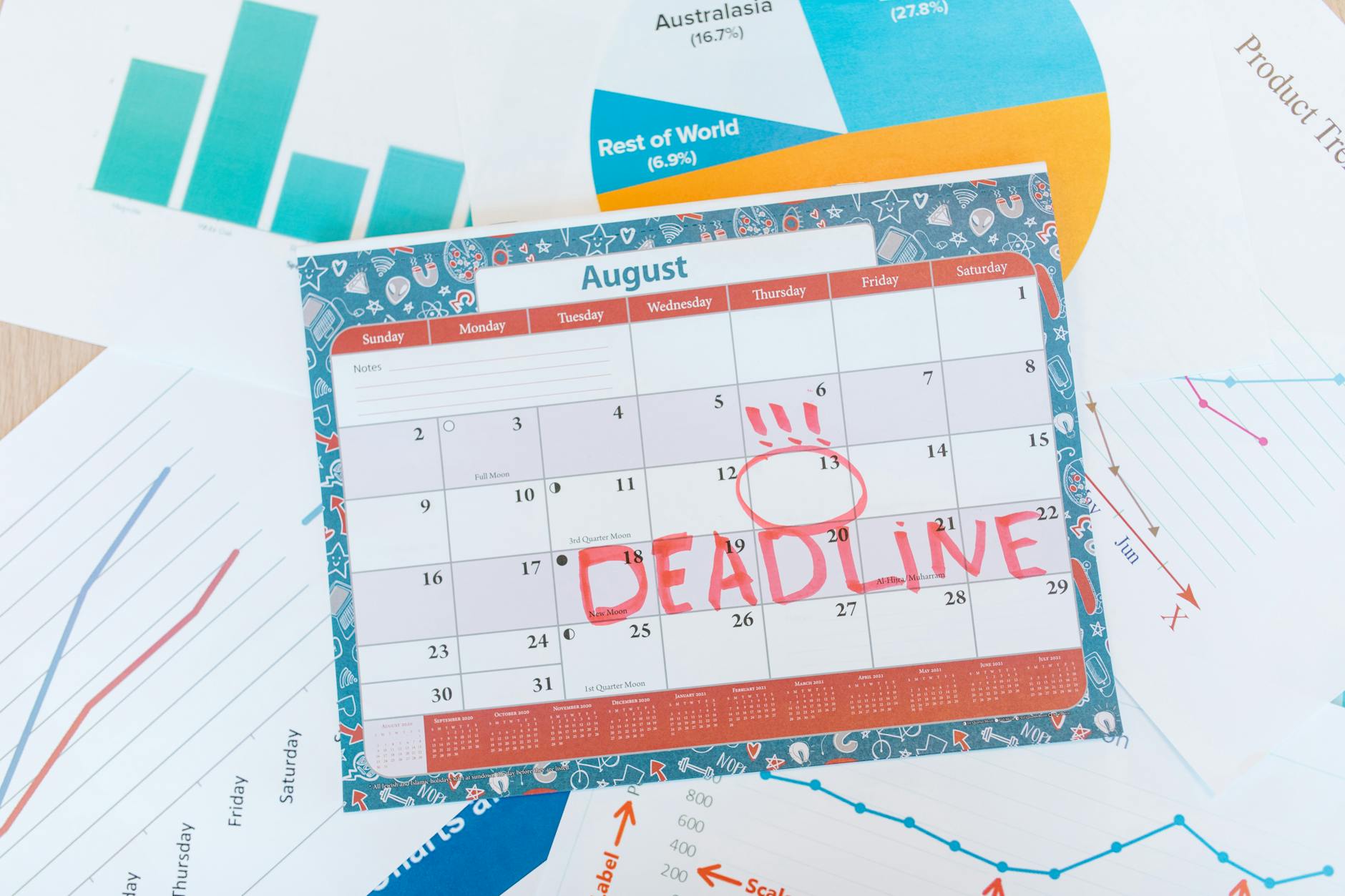
Your content calendar
looks great!
Slots filled, topics assigned, deadlines set. Someone put real work into it. It’s color-coded, maybe. Synced to everyone’s Google Calendars. Forty posts lined up for the next quarter.
And yet.
The content that comes out of it is flat. The traffic doesn’t move. The leads don’t come. Six months later, you have a hundred published posts and nothing that even looks like momentum.
The calendar didn’t fail you. You failed the calendar. before you had anything to put in it.
A Calendar Is Not a Strategy
This is the mistake, and it’s almost universal.
A content calendar is an execution tool. It tells you when things happen. It does not tell you why they happen, who they’re for, or what they’re supposed to do.
Strategy is what answers those questions. Without it, a calendar is just a to-do list with dates — a system for producing content on a schedule, with no underlying logic about what the content is actually for.
Most companies build the calendar first because it feels productive. It looks like planning. It creates the satisfying impression of a machine in motion.
What it actually creates is a machine for generating content that has nowhere to go.
See Also: the difference between a content plan and an actual strategy and the case for stopping publication entirely.
What the Calendar Gets Used For
In practice, a content calendar without a strategy underneath it becomes a system for producing three things:
Reactive content.
Something happened in the news. Something is trending. A competitor published something. The calendar has an open slot. The post gets written. It has nothing to do with your audience’s actual needs or your business goals, but the slot is filled and the calendar is intact.
Obligation content.
The slot needs something written, so somebody writes something. It meets the brief in the same way a form letter meets a job description — technically correct, completely devoid of intent. This is where the phrase “we need to publish something this week” comes from. That sentence is the sound of a calendar eating your content budget.
Volume content.
The belief — common, natural, very wrong — that more posts equals more traffic equals more leads. The calendar gets denser. The output gets thinner. Google notices.
None of this is anyone’s fault. The calendar is doing exactly what calendars do. The problem is that it was never supposed to carry the strategic weight that got assigned to it.
What Should Come Before the Calendar
Three things, in this order:
The audience.
Not a persona with a stock photo. A real human being with a specific problem they’re trying to solve, a specific level of trust in you right now, and a specific next action you want them to take. Every piece of content should be written for that person at that stage of their relationship with you. If you can’t answer “who is this for and what do I want them to do after reading it,” don’t publish it.
The thesis.
What does your brand actually believe? What’s the point of view that makes your content worth reading instead of anyone else’s? This is not a mission statement. It’s the thing you’d say at a dinner party that makes the table go quiet for a second. Build content around it and it compounds. Build content without it and it evaporates.
The funnel.
Where does this piece of content fit in the relationship between you and your reader? Top of funnel — building awareness, attracting new people? Middle — deepening trust, showing expertise? Bottom — moving someone toward a decision? A calendar full of top-of-funnel content and nothing else is a great way to build an audience that never converts. Every stage needs to exist.
When those three things are answered, the calendar becomes genuinely useful — because now you’re scheduling intent, not just topics.
The Way to Fix It
If you already have a calendar — and content already in flight — the fastest fix is a brief content audit before the next quarter starts.
For every topic in the queue, answer three questions:
- Who specifically is this for? (Not “our audience.” A person, at a stage.)
- What’s the one thing they should understand or do after reading this?
- Does this connect to something that matters for the business — a conversion, a relationship, a credibility signal?
If you can’t answer all three, pull the topic. Replace it with something you can.
(See also: making the content that never gets made)
It takes an afternoon. The content that comes out of the revised calendar will outperform the content that came out of the original one by a significant margin — not because the writing is better, but because it knows what it’s for.
Calendar: Innocent
The calendar didn’t lie to you. It just showed you what you asked it to show you: a full schedule that looked like a plan.
The plan is the part you have to build separately. Luckily, that’s what I do.
This post is part of the Clifton Creative guide to fractional editorial leadership.
Jacob Clifton is the principal of Clifton Creative, an editorial strategy consultancy based in Austin, Texas. He spent fourteen years as a flagship staff writer at Television Without Pity and has written for Tor.com, Vulture, BuzzFeed News, and the Austin Chronicle.
A filled calendar often provides a false sense of security. It tracks production and deadlines—showing that you’re busy—but it doesn’t guarantee that the content is actually performing. If your strategy prioritizes “filling slots” over meeting specific audience needs, the calendar acts more as a checklist than a growth engine.
Not at all. The calendar remains a vital tool for organization and consistency. The shift needs to be in how you populate it. Instead of starting with “What do we publish on Tuesday?”, start with the specific problems your audience is facing and let those solutions dictate the schedule.
The biggest pitfall is focusing on volume over value. Many teams fall into the trap of creating “filler” content just to maintain a posting cadence. Other common errors include ignoring historical data on what actually worked and failing to align individual posts with a broader business objective.
Look at your engagement and conversion metrics rather than your publishing frequency. If you’re hitting every deadline but seeing stagnant growth or low audience interaction, your calendar is likely disconnected from your strategy. Busy-work feels productive, but real results come from content that resonates.
Data should be reviewed monthly, but a deep-dive audit of your strategy is best handled quarterly. This allows you to spot patterns, pivot away from topics that aren’t landing, and double down on the themes that are actually driving business results.